Hottest Hatch, The Peugeot 106
Written by Chris Seely (Originally written for the Avants Magazine)
Photos by Carter Chang
In my tenure here at Avants, I’ve been privileged to write about some truly incredible cars. I’ve stood in the presence of boyhood dreams such as the Aston Martin DB4, Ferrari Daytona, and Ford RS200. It has been, and always will be, a genuine honor to write about these unobtainable dream machines.
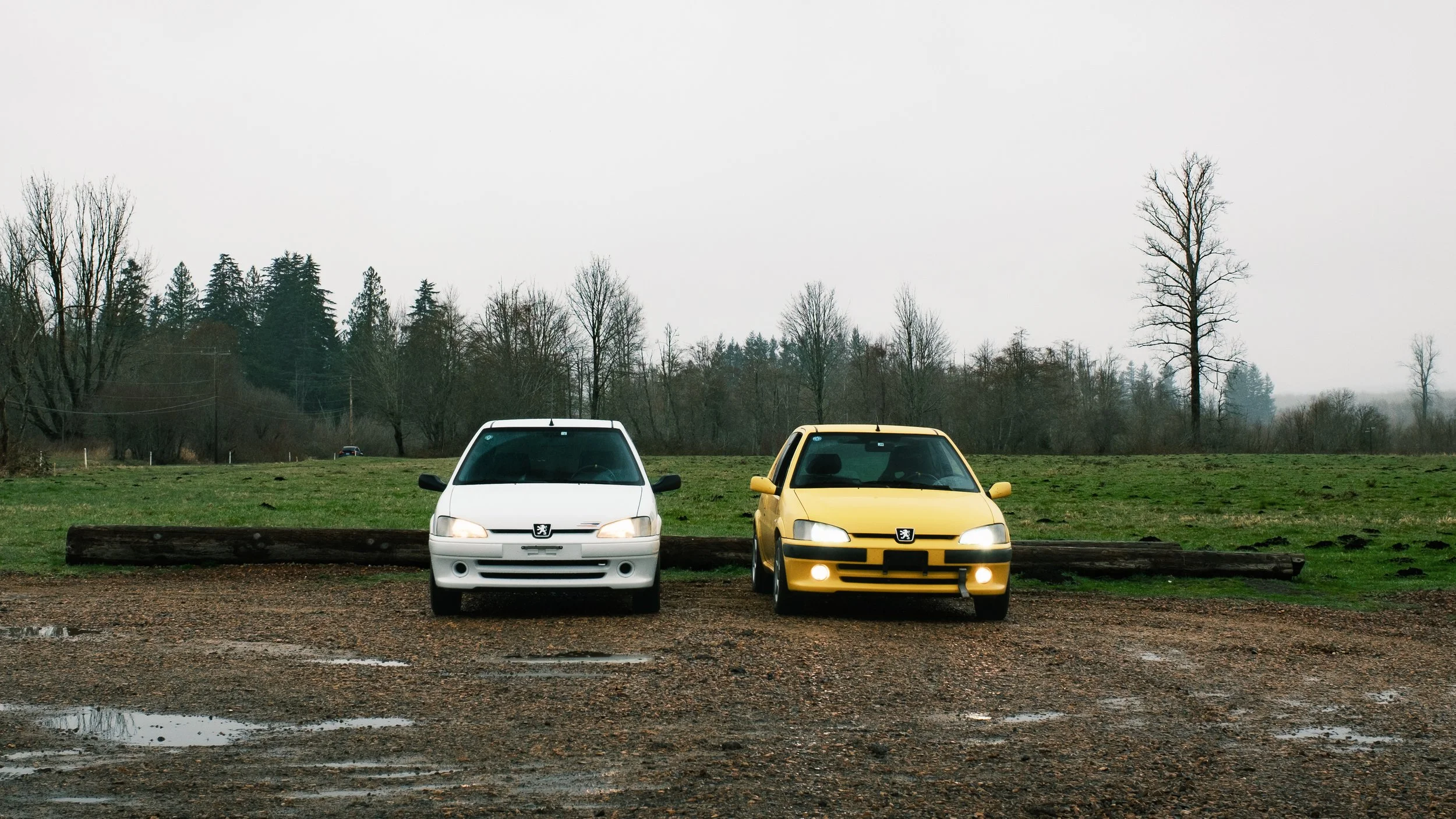
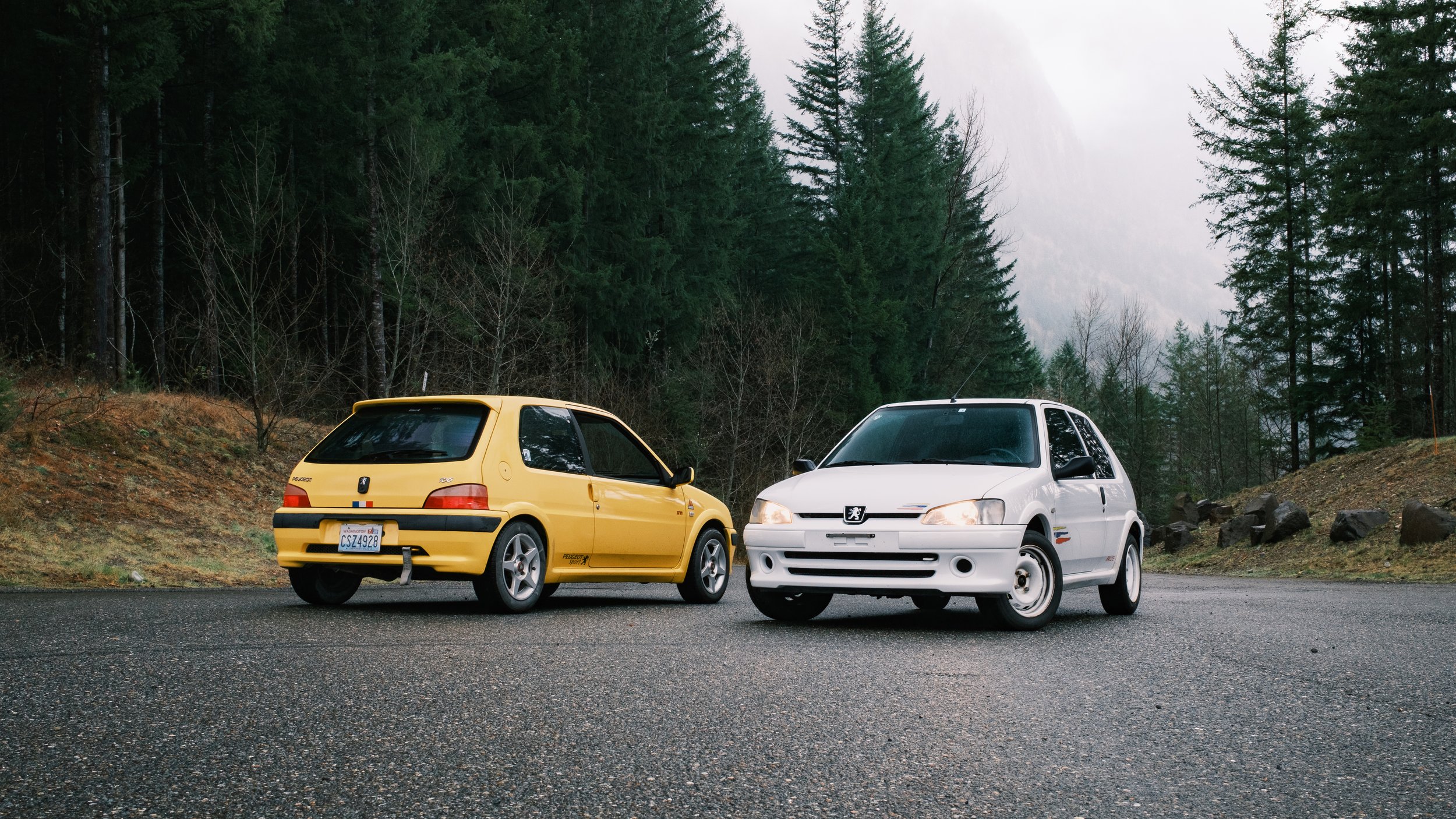
But for this issue, I was blessed by our editor Karl with an assignment of a very different sort: two cars of far lower status, but ones I love intimately. My own Peugeot 106 GTI, and my good friend Mark’s 106 Rallye. These are not hero cars. No bedroom wall has ever worn a poster of a Peugeot 106, yet these cars are so fun, that owning one has ruined almost every other car for me.
History
In true French tradition, Peugeot is a bit of an oddball. Founded in 1810 as a steel manufacturer, the company has produced everything from pepper grinders to bicycles. By the 1980s, however, Peugeot perfected the formula of the lightweight hot hatch, cementing its reputation with the front-wheel-drive 205 GTI and the unhinged, mid-engined Group B legend—the 205 T16.
Here in the States, we never received the fun, small-displacement Peugeots. Instead, U.S. dealers offered big, elegant sedans and wagons like the 505 Turbo—charming in their own way but far removed from Peugeot’s rally-bred soul.
To experience the true heart of Peugeot, you need to drive one of their micro hatchbacks. Everyone knows the 205; but by our reckoning, the 106 is even better. The two cars chosen for this article represent the most driver-focused versions of the breed: the Rallye (white) and the GTI (yellow). In truth, though, any 106 variant is a deeply rewarding driver’s car.
106 Rallye
Just like your boyhood dream cars, the Audi Quattro and Lancia Delta Integrale, the 106 Rallye is a true homologation special. Like the 205 Rallye before it, the 106 was built for Group N competition. Unlike Groups A and B, Group N focused on small-displacement cars under 1.3 liters, pushing manufacturers to cut weight mercilessly. Peugeot responded by stripping as much as they could.
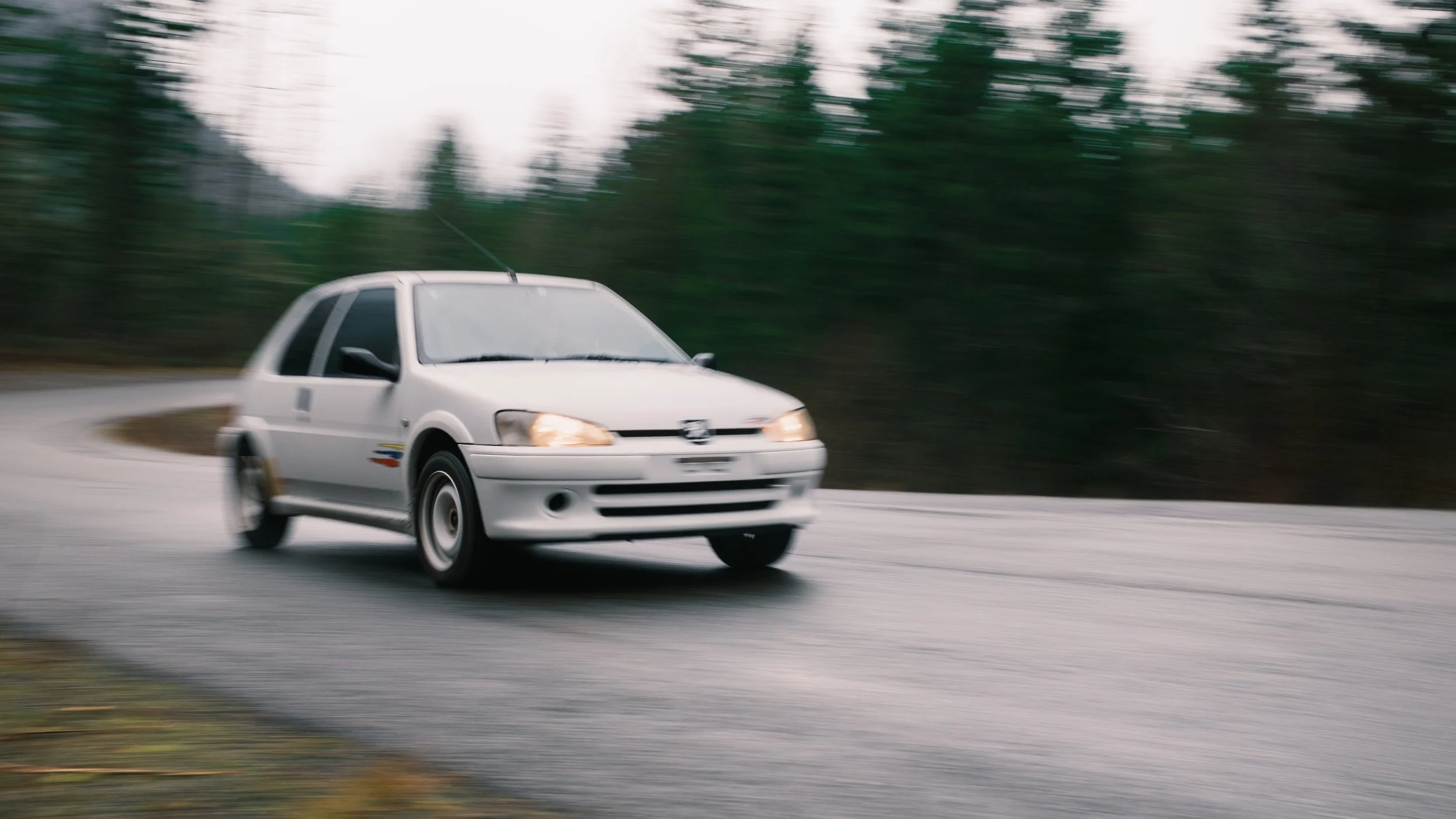
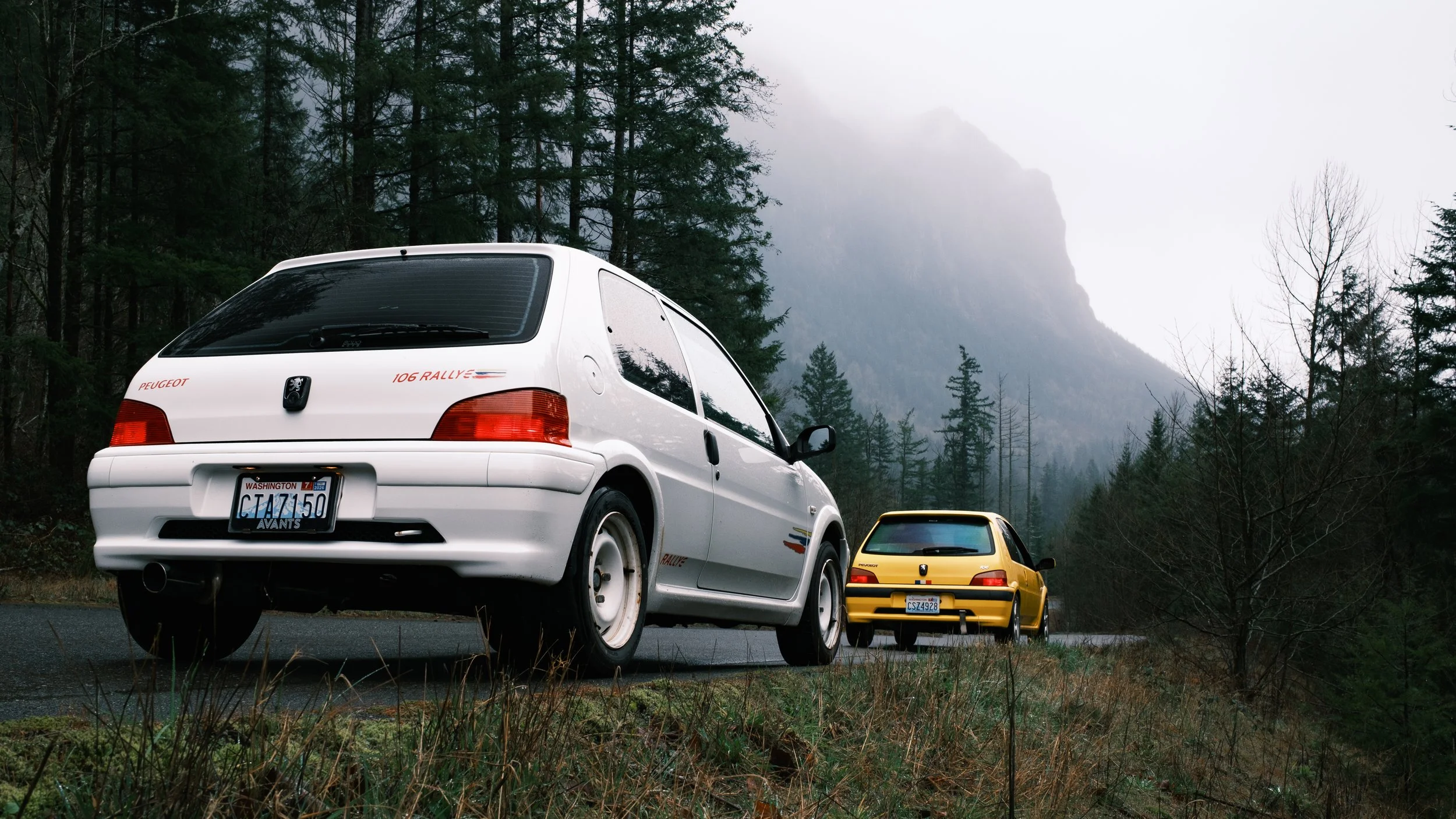
These Rallye variants are the Caterhams of the hatchback world. With roll-up windows, no air conditioning, and no gram of excess fat, they weigh about as much as a runner’s shoe. To underscore their competition intent, Peugeot equipped every 106 Rallye with unique livery, interior, and—most importantly—white Michelin steel wheels. Spot those details, and you’re looking at genuine Group N heritage.
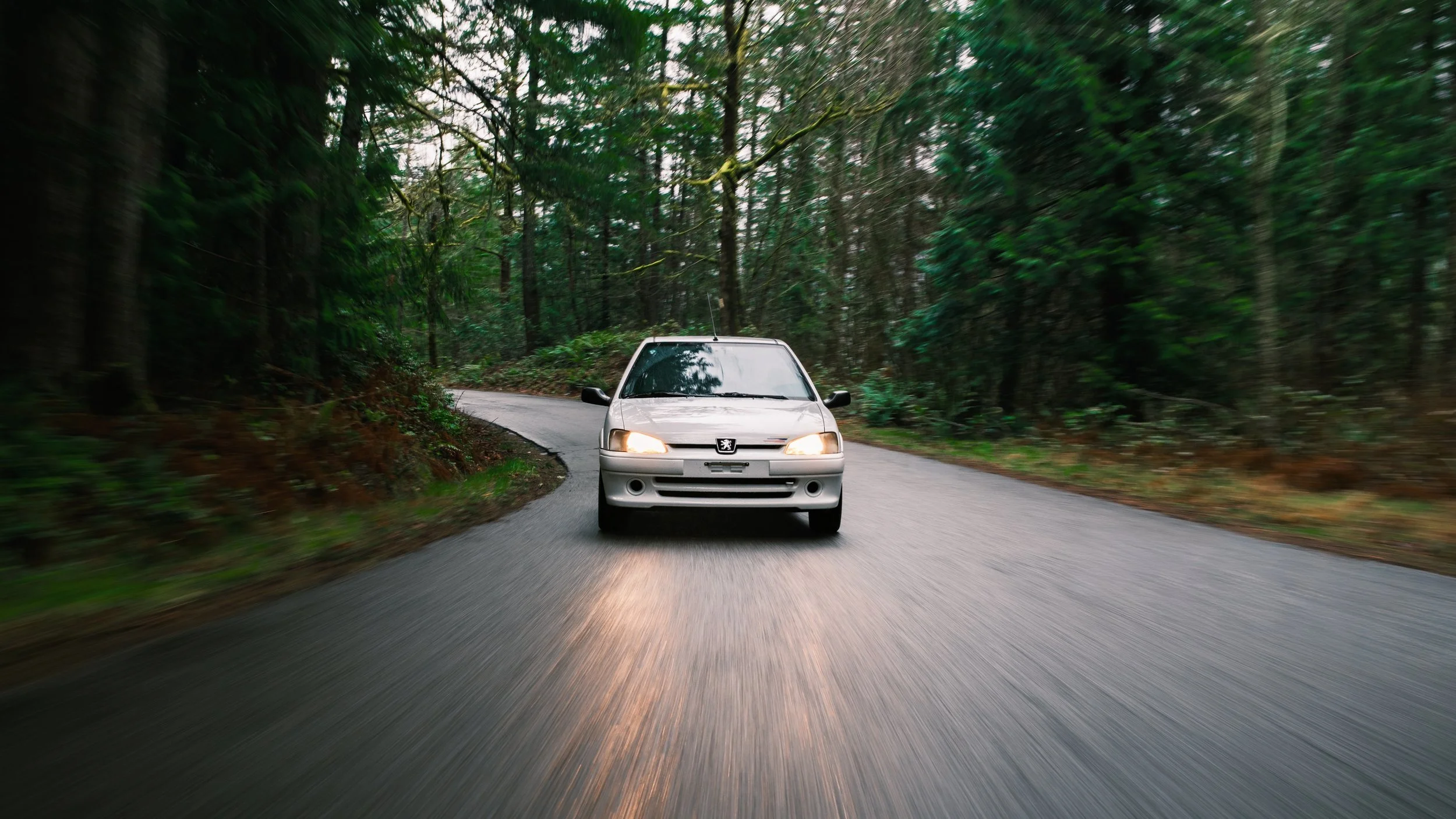
There were two iterations of the Rallye: the boxy Series 1 with its 1.3-liter engine, and the smoothed-out Series 2 powered by a 1.6-liter. Both make a quoted 100 horsepower, but between the two, the Series 1 is angrier to drive. Its aggressive camshaft and high compression mean it produces little meaningful power below 5,500 rpm—turning even a grocery run into a full-throttle European rally stage.
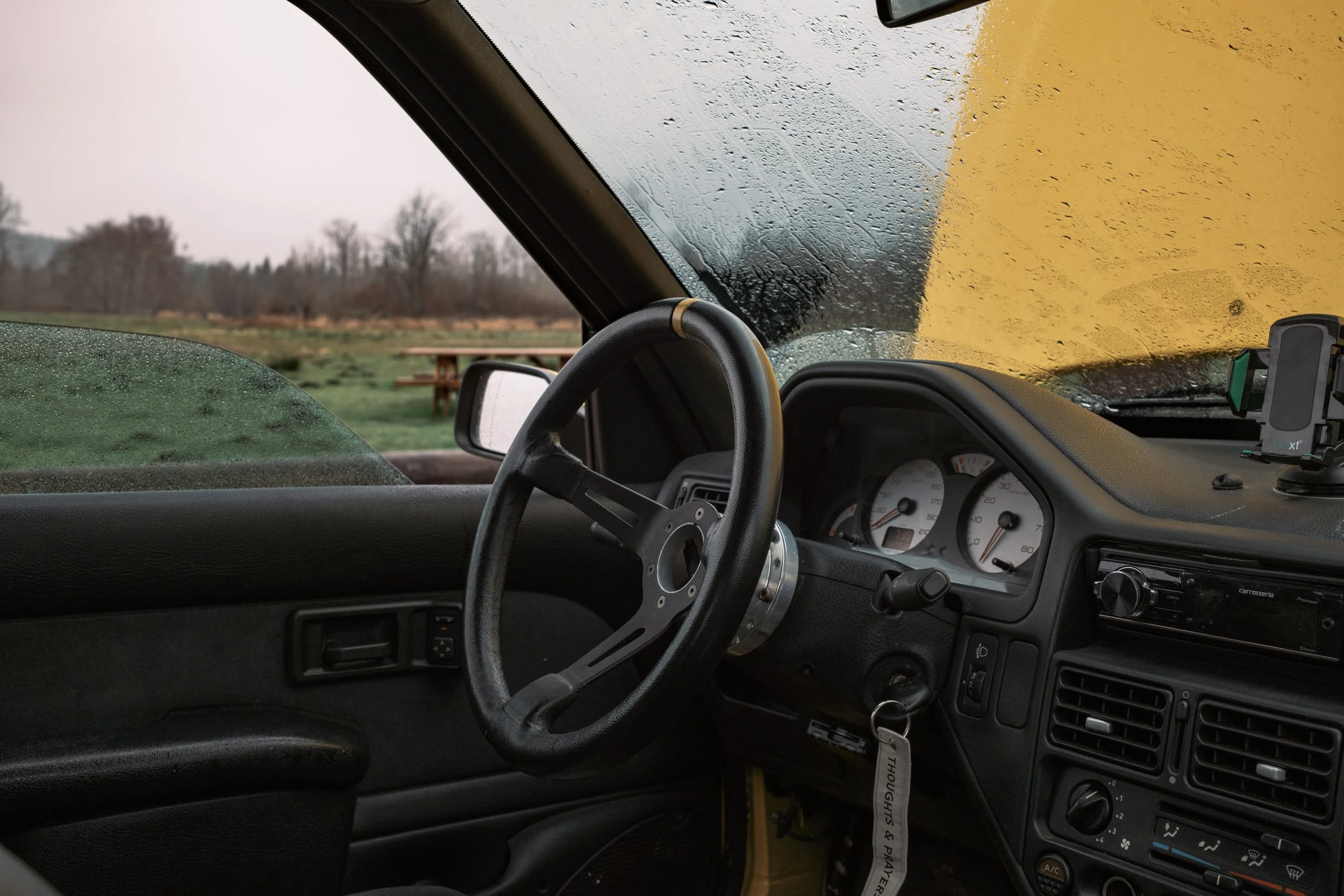
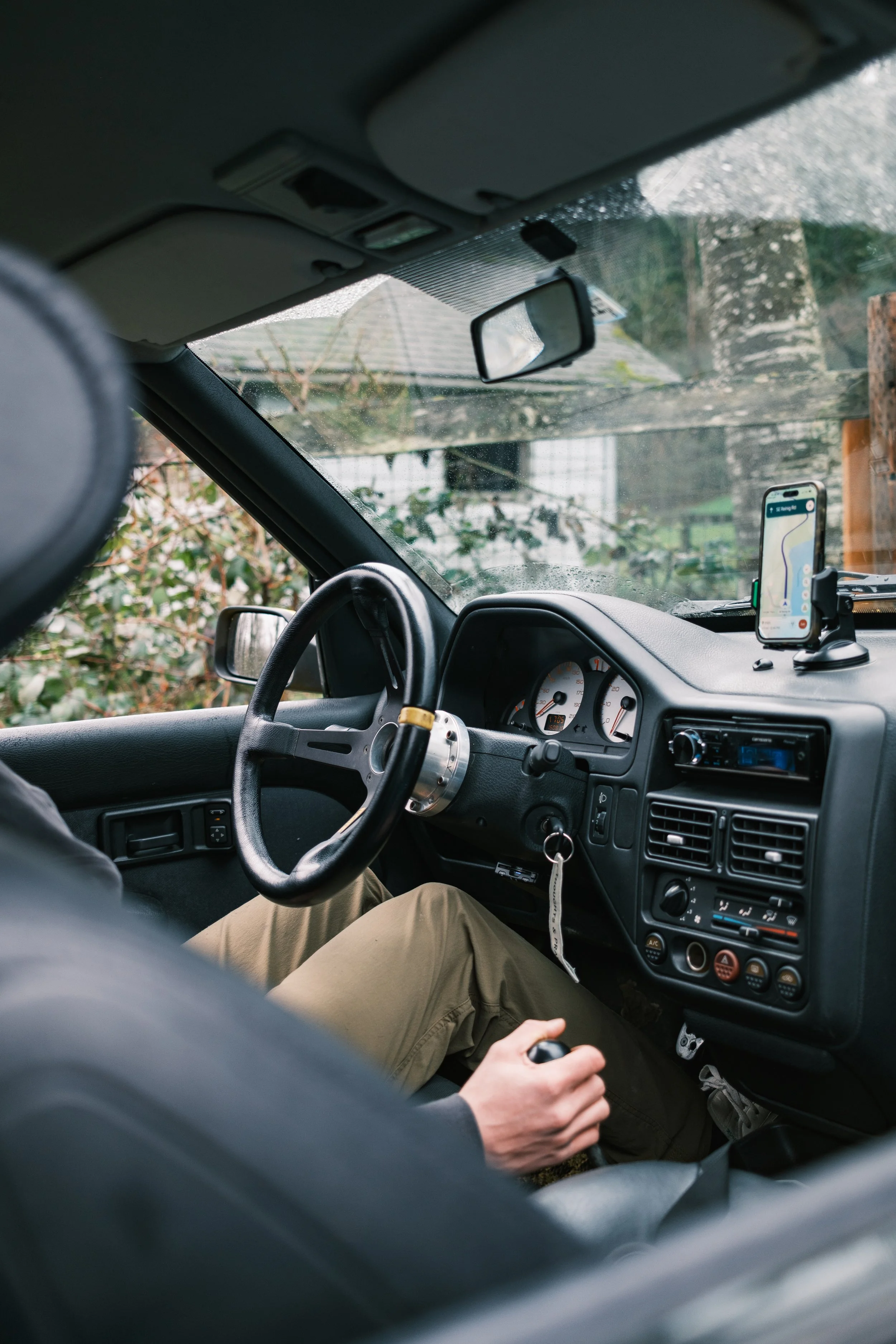
The Series 2 Rallye is the same formula with two clear advantages: it both speeds up and slows down faster. The larger engine brings more usable torque, while stronger brakes make modern traffic far less stressful. Inside, lovely blue Jaeger gauges serve as a daily reminder that you bought the most special version of Peugeot’s cheapest car. If you’re a collector who actually intends to drive their Rallye, the Series 2 is the smart choice. This is exactly why Mark Chang bought one. His 106 Rallye S2 battles Seattle traffic during the week, then devours back roads on the weekend. Appropriately, it was an impulse buy: Mark tagged along when I bought my GTI, spotted the Rallye, and pounced. In the words of Mark, “It was a bit opportunistic and seemed like something I should own for a little bit. It is so remarkably easy to drive, to daily, to hoon. Its weight truly makes it a great all-rounder.”
106 GTI
If your philosophy begins and ends with minimizing weight, the Rallye is the only answer. But if you want the best value in the 106 market, follow my lead and buy the GTI. Where the Rallye deletes everything possible, the GTI gives its pampered owners the same luxuries as a base Corolla; central locking, electric windows and air conditioning. At about 2,000 pounds it alas isn’t the lightest 106—but it may be the best one to live with day to day.
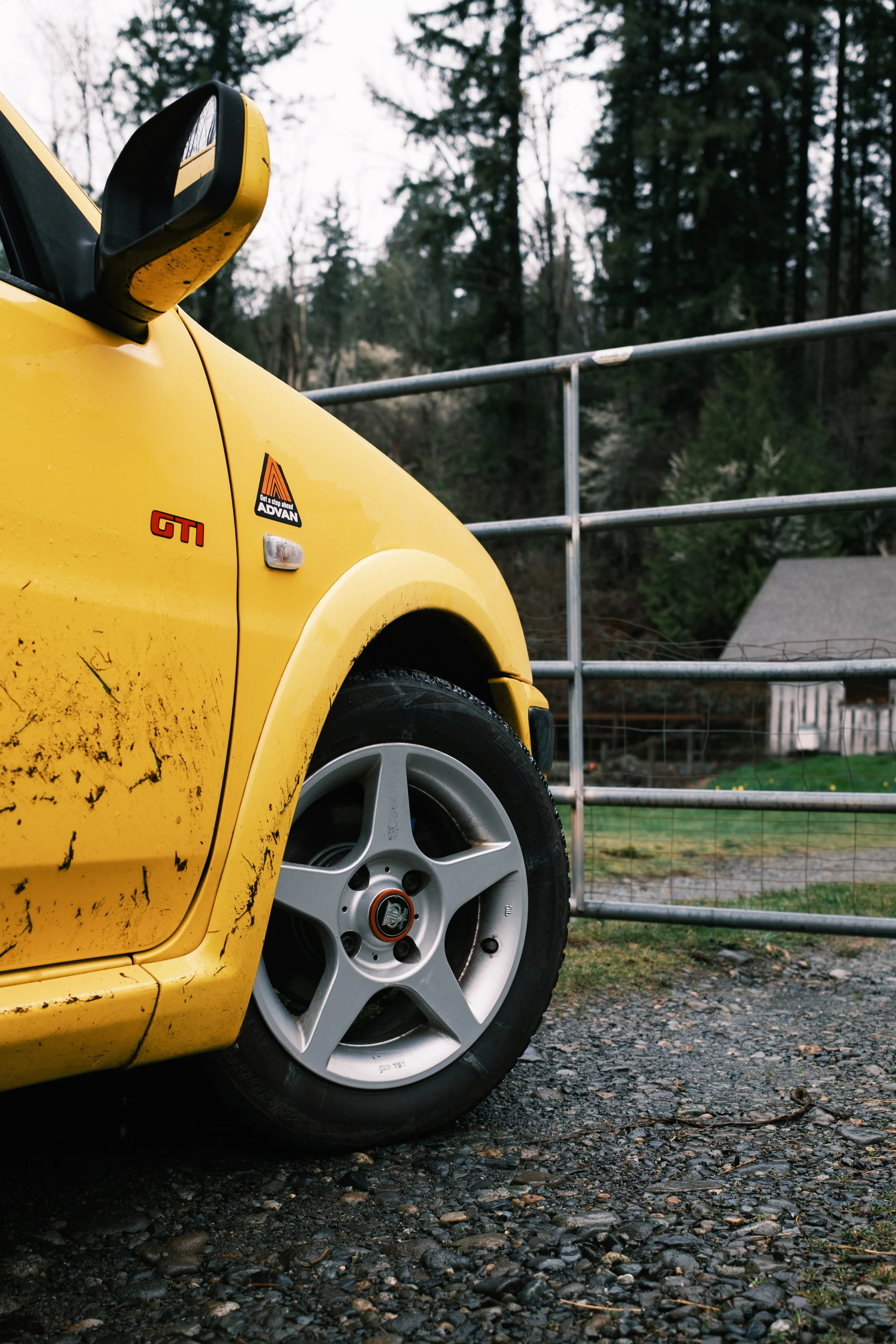
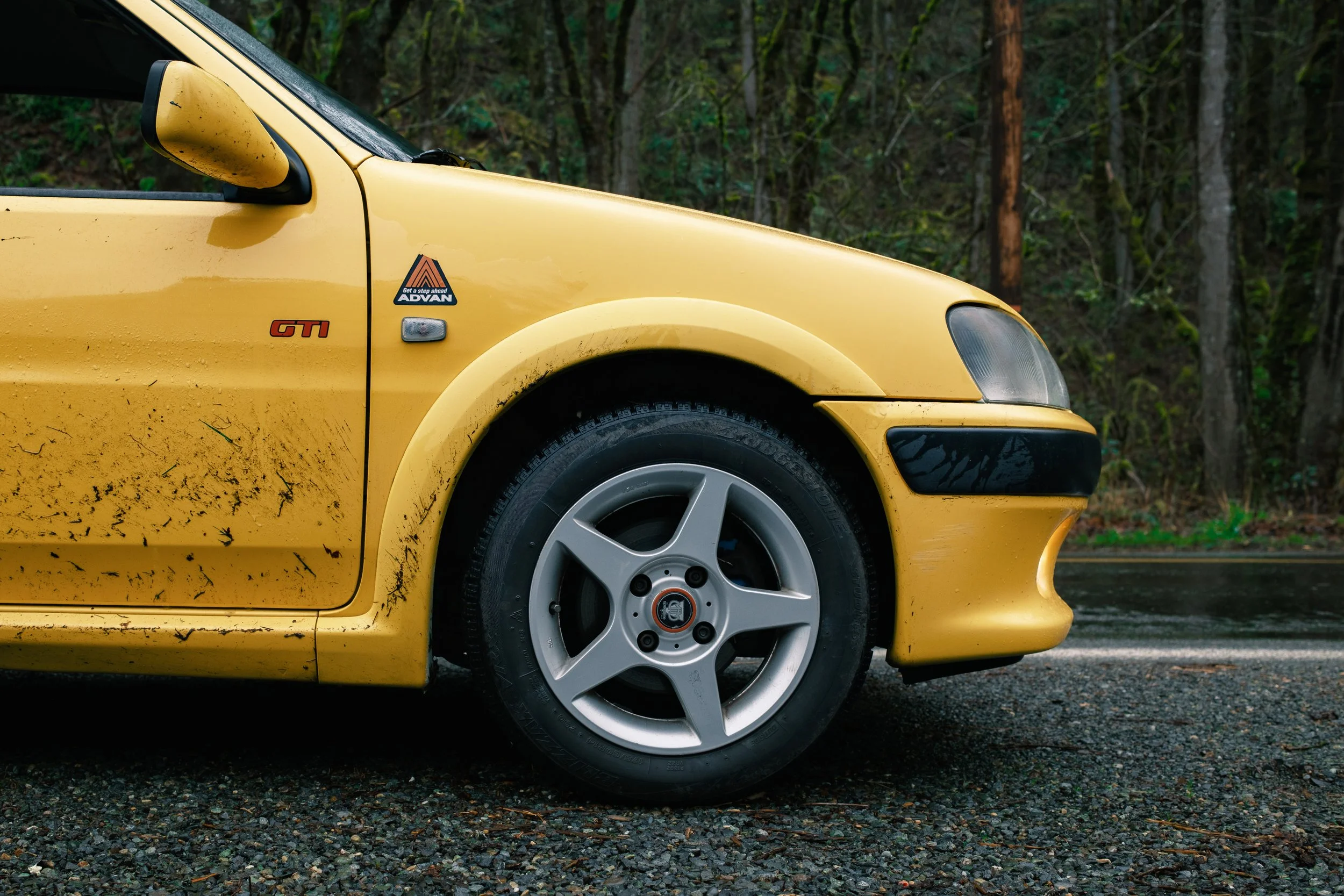
That said, I didn’t buy a GTI for the air conditioning. I bought it for its swansong of an engine. Whereas all versions of the Rallye have an 8 valve head, the GTI has a twin-cam 16 valve, and as Robert Frost says about the road less traveled, that has made all the difference. The twin-cam 16 valve in the GTI snorts like piglet down low, and buzzes like a hive of bees up top. 0-60 happens in the mid sevens, which is not fast, but plenty quick for backroads fun. With short gears, all 106s live in the top of the rev range, and the GTI’s twin cam howls happily at you all the way to 7,500 rpm. Yes, I love the Rallye, but the 106 GTI breathes and screams like a French Vtec, its athletic quirkiness, and my yellow car’s track beater status just speaks to me.
Ownership and Dynamics
Whether you have the snorting and screaming GTI, the runner’s shoe Rallye, or even just the base, a 106 is a marvelous car to drive. The French ethos for the hot hatch is the same across all the brands. Stiff chassis, soft suspension, and perfect controls. This translates to a car that dances sharply, but speaks through steering and body roll. On rough roads, the 106 eats up bumps without jumping around, just as it was meant to in Group N. This is done through its quirky and confident suspension. Macpherson struts in the front are normal, but the rear uses torsion bars with shocks pointing directly inward. Regardless of how this magic works, it keeps the car soft but easy to push.
In typical slow car fast fashion, to master a 106, you need to be confident and early. The weight, suspension, and brilliant chassis means it can hold pace with nearly any backroads toy, but only when it gets up to speed. Every mistake will lead to a point by. The trick to driving a 106 is to be conscious of one main fact. There is no weight over the rear axle. As a result, the car loves to dance and pivot around its nose like a fly fisherman snapping line through the rod. Success comes by braking hard in a straight line, trail braking lightly to keep grip in the nose, then committing hard to power out of the corner. If you lift, you rotate. If you commit, you’re a hero. Sure you could buy a Porsche Cayman or BMW M2, but when a cheap little 106 can make backroads this fun, why would you?
Closing
As you can tell, I love the Peugeot 106. I love the Rallye, I love the GTI, and I love that they are not yet understood and appreciated. The two cars in this article are some of the greatest of all time. The fun per dollar ratio is unbeatable. They communicate, dance, and rotate above their class, yet you can refresh both these cars front to back for about the cost of insuring a 911 for two years. Every true driver should find a way to get seat time in a 106. Just don’t let it ruin all other cars for you like it has for me.